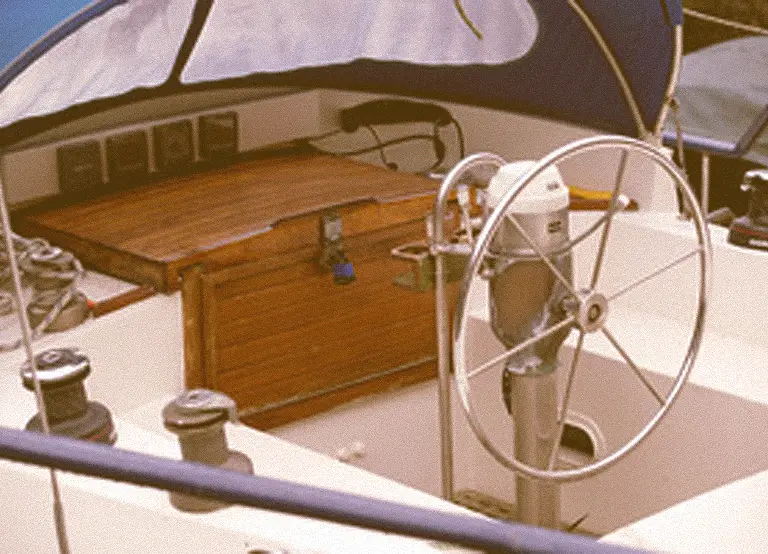
Stop water finding its way in around a cracked cockpit
In bad weather, a boat’s cockpit takes the worst of the spray and standing water, and fine cracks – particularly around the entrance to the cabin – let that water track through into the boat below. Captain Tolley’s Creeping Crack Cure uses capillary action to seep into these cracks and seal them from the inside, without needing to strip back the surrounding gelcoat or fibreglass.
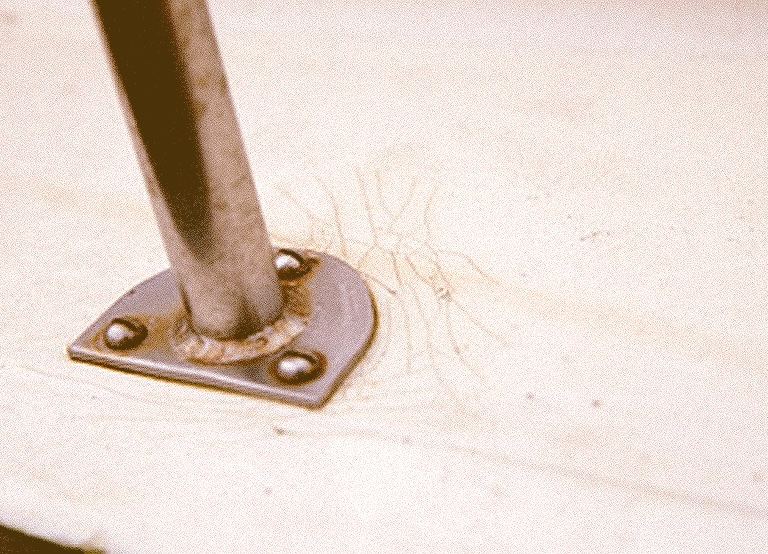
Over time this loosens the fitting and opens fine cracks around its base, often invisible until water starts appearing below.
Captain Tolley’s Creeping Crack Cure uses capillary action to seep into these hairline cracks and seal them from the inside, without needing to remove or rebed the fitting.
“I have used it on the windows with good effect. Recently I applied it to large leaks in the cockpit sole. It needs repeated application and is messy. But it sure beats pulling up and rebedding the whole hatch.”
– Karl Stein, Judge.me review
*For best results, apply in dry conditions above 10°C / 50°F and keep the area dry while it cures. Cold or damp weather slows curing, and moisture can dilute the sealant before it sets, so allow extra time if conditions aren’t ideal.
This works best on a true hairline crack – finer than about 0.8mm. If you can see a fine line but can’t fit a fingernail into it, it’s a good match. A wider crack, or one you can see daylight through, points to a deeper repair (fresh gelcoat or fibreglass) rather than a sealant.
Not usually – a cockpit sole is a large surface, and it typically needs several applications rather than one. It’s still a far less disruptive option than pulling up and rebedding the whole area, even if it takes some patience to get there.
Yes, once fully cured – apply it in a dry spell and give it a full day before exposing it to rain, so the sealant has time to set properly.

Deck fittings - chain plates, stanchion bases, cleats, winches, handrails, and deck fill pipes - are constantly stressed by rigging loads and movement underway, which loosens them and opens hairline cracks for water to enter the boat.
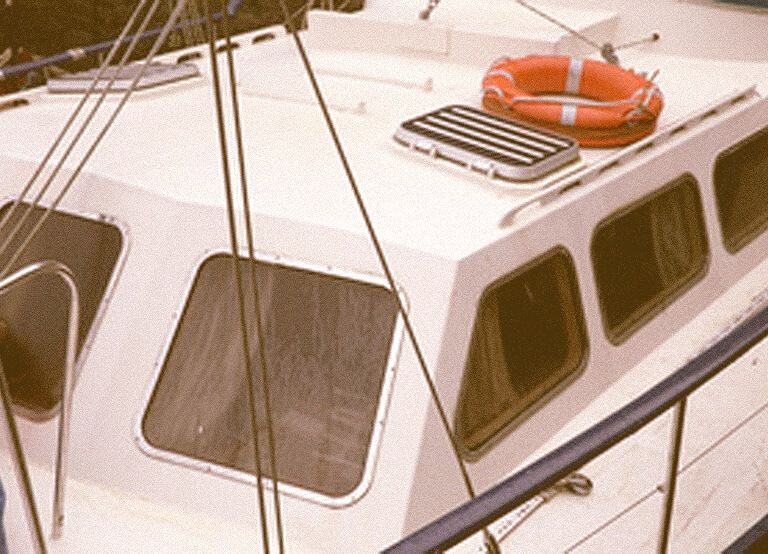
Coachroofs combine fibreglass, wood, and metal fittings that all expand and contract at different rates, opening hairline gaps along the joints and seams where water can track in.
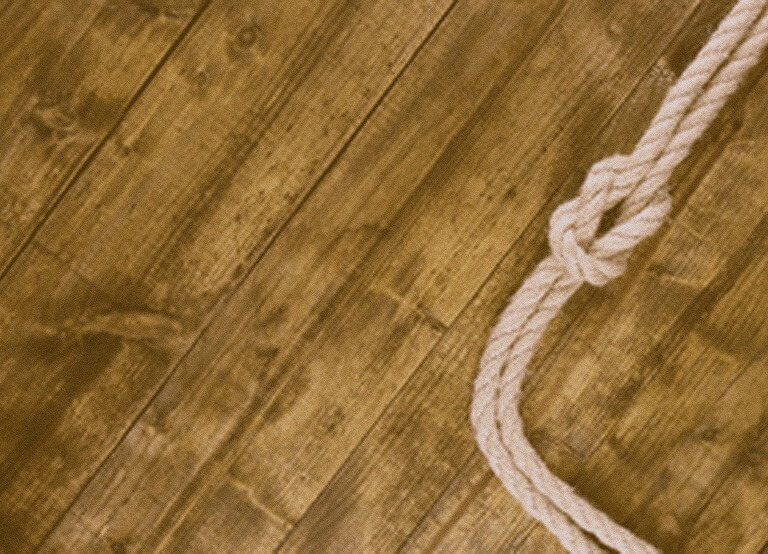
Wooden decks, teak trim, and the joints between planks suffer the extremes of sun and rain, which opens hairline cracks along seams, caulking lines, and where the wood meets fibreglass or fittings.
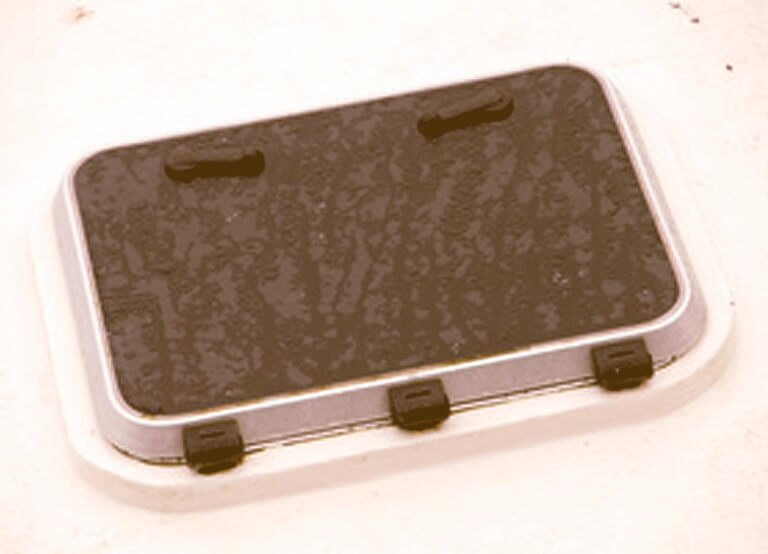
Deterioration of the seal between the frame and boat structure is a very common cause of leaks from hairline cracks in boats.

We use cookies to improve your experience on our site. By using our site, you consent to cookies.
Manage your cookie preferences below:
Essential cookies enable basic functions and are necessary for the proper function of the website.
These cookies are needed for adding comments on this website.
Statistics cookies collect information anonymously. This information helps us understand how visitors use our website.
Stores the visitor’s tracking consent preference (opt-in or opt-out) for Mixpanel analytics.
Vimeo is a video hosting platform for high-quality content, ideal for creators and businesses to showcase their work.
Service URL: vimeo.com (opens in a new window)
SourceBuster is used by WooCommerce for order attribution based on user source.
You can find more information in our Cookie Policy and Privacy Policy.