Once in place, Captain Tolley’s creates a watertight seal that’s strong, flexible and clear in colour.
Originally developed for marine waterproofing it stands up to the toughest conditions.
No, you don’t need to cut off the end of the nozzle.
The 60ml bottle already has a small hole in the nozzle and has a replaceable cap.
The 250ml bottle needs a pin to pierce the top of the nozzle and it also comes with a replaceable cap.
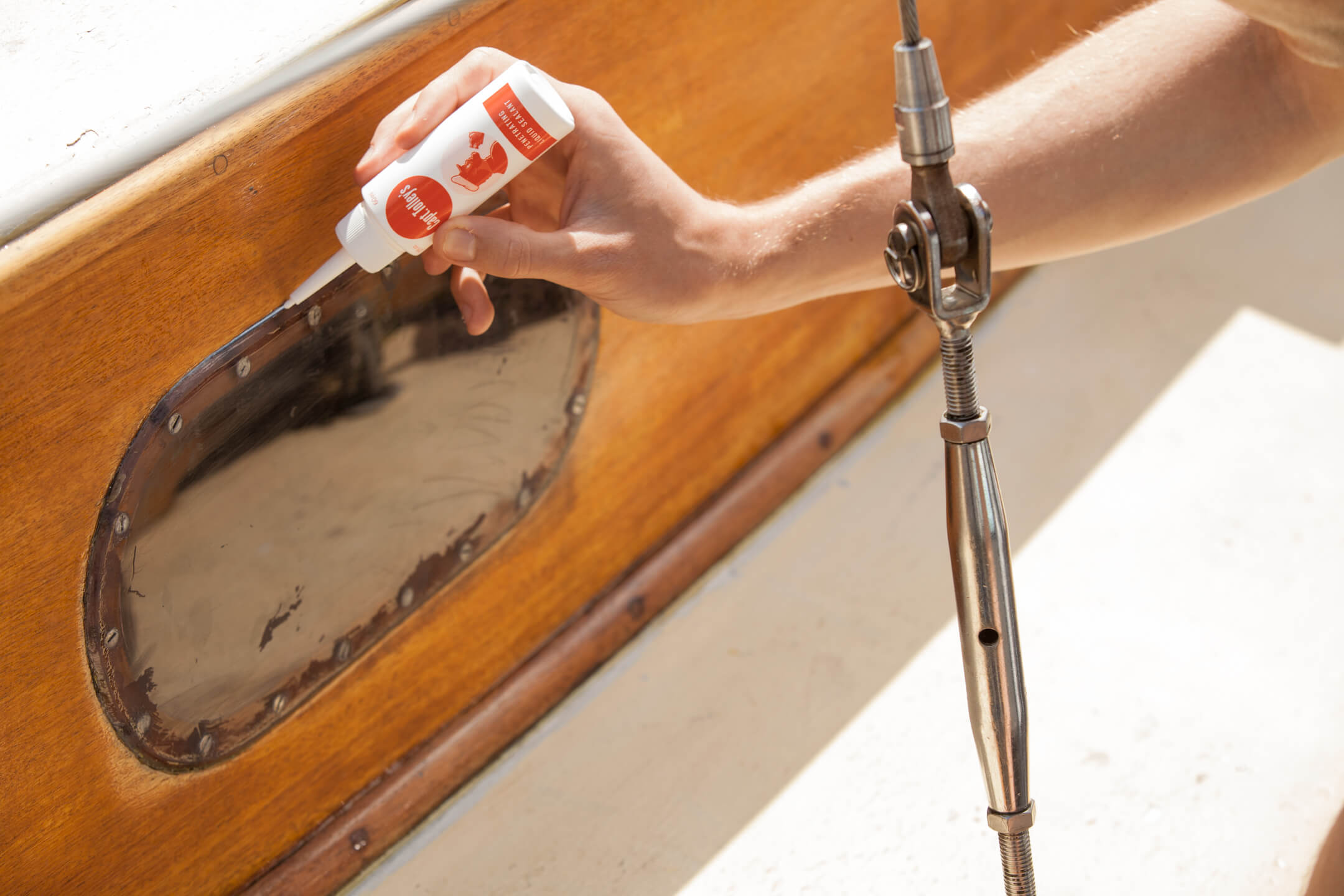
Unlike conventional sealants it’s not necessary, as the sealant will penetrate cracks regardless of the materials involved.
It has good chemical resistance. Once cured, the sealant is unaffected by most everyday chemicals.
It can be painted over successfully since so little of the sealant is exposed to the surface.
No. The area exposed to sunlight is so small that it doesn’t present a problem.
No. Unlike many sealants and glues it is water-based and non-toxic.
It depends on the size of the repair, however, we recommend leaving a minimum of 24-hour period for sealing to be on the safe side.
The exposed edges of the sealant dry first; the sealant in the interior takes a little longer.
If atmospheric conditions are cold and humid, it may even take longer than 24 hours to cure.
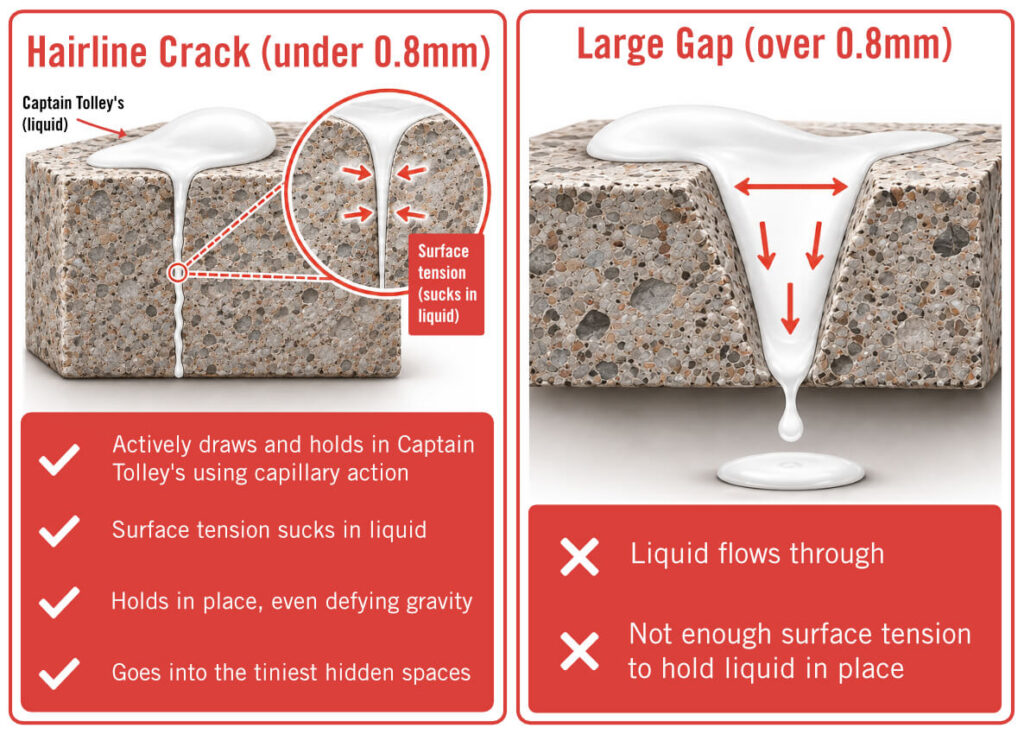
Captain Tolley’s will only work on cracks and gaps approximately less than 0.8mm in width.
Anything larger than this, then the capillary action formula won’t work.
If the product spills onto the surrounding surface when applying, use a damp cloth to remove and prevent the sealant from staining the area.
For dried stains, we recommend using industrial wet wipes.
It’s optimal if the area is as dry as possible, but Captain Tolley’s will still work with a small degree of moisture present.
We do not recommend using the product or allowing it to cure in wet weather conditions as the sealant will dilute.
A bottle can last up to 10 years when stored in a cool, dry place.
Captain Tolley’s is a specialist product for one specific job: sealing fine, hairline cracks by capillary action.
It’s not designed for:
It’s normal for a crack to take several applications, not one.
The sealant is very thin by design, so it can be drawn into a hairline gap – but that also means a single application often isn’t enough to fully bridge the crack.
Most repairs need several applications spaced 30 minutes to an hour apart, and a deeper or longer crack can take several rounds over a few days.
If the crack is still taking up sealant, that’s not a sign it’s failing. It’s a sign to reapply. Once it stops absorbing and sits on the surface, it’s done.
The sealant cures fastest in dry conditions above 10°C / 50°F.
Cold or damp air slows the process, and moisture can mix with the sealant and dilute it before it sets.
Warm and dry (above 15°C, no damp) – 24 hours
Cool or occasionally damp (10-15°C, or brief damp spells) – 48 hours
Cold and/or persistently damp (below 10°C, an unheated space, or a consistently damp room) – 3 days, up to a week in poor conditions
Warm and dry (above 15°C, no damp)
24 hours
Cool or occasionally damp (10-15°C, or brief damp spells)
48 hours
Cold and/or persistently damp (below 10°C, an unheated space, or a consistently damp room)
3 days, up to a week in poor conditions

Do not apply below 10°C / 50°F or in damp conditions.
Being under cover isn’t the same as being dry. A garage, shed, or unheated room can still be damp even when it’s sheltered from rain – check if the air feels dry, not just that the item is out of the weather.
Repairs on items that hold standing water – a toilet cistern, a sink, a pond or water feature – need longer regardless of conditions, since they’re tested by water pressure rather than just moisture in the air. Allow the longer end of the range and do a small test-fill before relying on the repair.
Because the sealant is so thin, it’s easy to apply more than a crack can absorb.
Wipe away any excess immediately with a damp cloth, especially near paintwork, tiles, or anywhere a white residue would be noticeable once dry.
If a stain has already dried, industrial wet wipes will usually remove it.
On bare, uncoated metal fixings, such as rivets or screws, excess sealant left to sit can occasionally cause light rusting over time.
It works best on coated, aluminium, or stainless steel fixings – if you’re applying it around bare metal hardware, treating or repainting the area once it’s dry helps prevent this.

We use cookies to improve your experience on our site. By using our site, you consent to cookies.
Manage your cookie preferences below:
Essential cookies enable basic functions and are necessary for the proper function of the website.
These cookies are needed for adding comments on this website.
Statistics cookies collect information anonymously. This information helps us understand how visitors use our website.
Stores the visitor’s tracking consent preference (opt-in or opt-out) for Mixpanel analytics.
Vimeo is a video hosting platform for high-quality content, ideal for creators and businesses to showcase their work.
Service URL: vimeo.com (opens in a new window)
SourceBuster is used by WooCommerce for order attribution based on user source.
You can find more information in our Cookie Policy and Privacy Policy.
